Junk Mail and the Environment: The Numbers
How much paper advertising mail uses, how much of it goes unread, and where the numbers everyone quotes actually come from.
By Jake WaitzmanUpdated Sources linked throughout
Short answer: USPS delivered 56.8 billion pieces of advertising mail in fiscal 2025, about 2 million tons of it, and households threw 39% away unread. The famous figures (100 million trees, 51.5 million tons of greenhouse gases) date from 2007 and 2008, when ad mail volume was nearly twice today's. The waste is smaller than advertised, and still avoidable.
- 56.8 billion
Pieces of advertising mail USPS delivered in fiscal 2025
USPS Marketing Mail, 52% of all the mail it carried. Down 45% from the 2007 peak of 103.5 billion.
- 2 million tons
What that advertising mail weighed
4.05 billion pounds of Marketing Mail, about 2.03 million tons.
- 39%
Share of advertising mail households threw away unread
Households read 51% and set aside the other 10%.
Source: USPS Household Mail Survey
- 393
Pieces of advertising mail the average household received in fiscal 2025
Down from 659 in 2015.
Source: USPS Household Mail Survey
- 3.67 million tons
Advertising mail in the municipal waste stream in 2018
The EPA's most recent product-level data: about 1.3% of all municipal solid waste generated that year.
Source: EPA Facts and Figures about Materials, Waste and Recycling
- 9.7 billion
Saturation pieces sent to nearly every address on a route
Including nearly 3 billion EDDM flyers addressed to “Postal Customer” (USPS Postal Facts), which households cannot opt out of.
Source: USPS Revenue, Pieces and Weight report (sum of saturation letters, saturation flats and EDDM Retail)
How much advertising mail is there?
In fiscal 2025 the Postal Service delivered 56.8 billion pieces of Marketing Mail, its class for advertising. That was 52% of all the mail it carried, and it weighed about 4.05 billion pounds, roughly 2 million tons.
Volume has fallen 45% since its 2007 peak of 103.5 billion pieces. Keep that in mind when you meet a junk mail statistic: most of the ones still circulating were worked out near the peak.
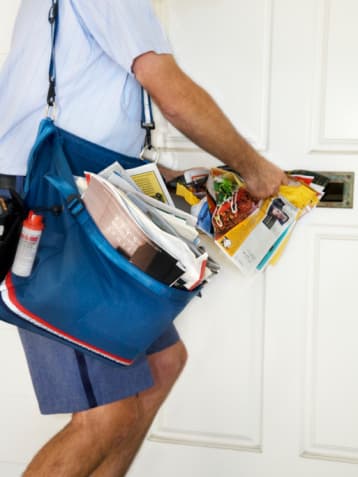
About 9.7 billion of the 2025 pieces were saturation mail, sent to nearly every address on a carrier route. Nearly 3 billion of those were Every Door Direct Mail flyers addressed to “Postal Customer,” the kind no household can opt out of. How EDDM works, and what it costs advertisers.
How many trees does junk mail use?
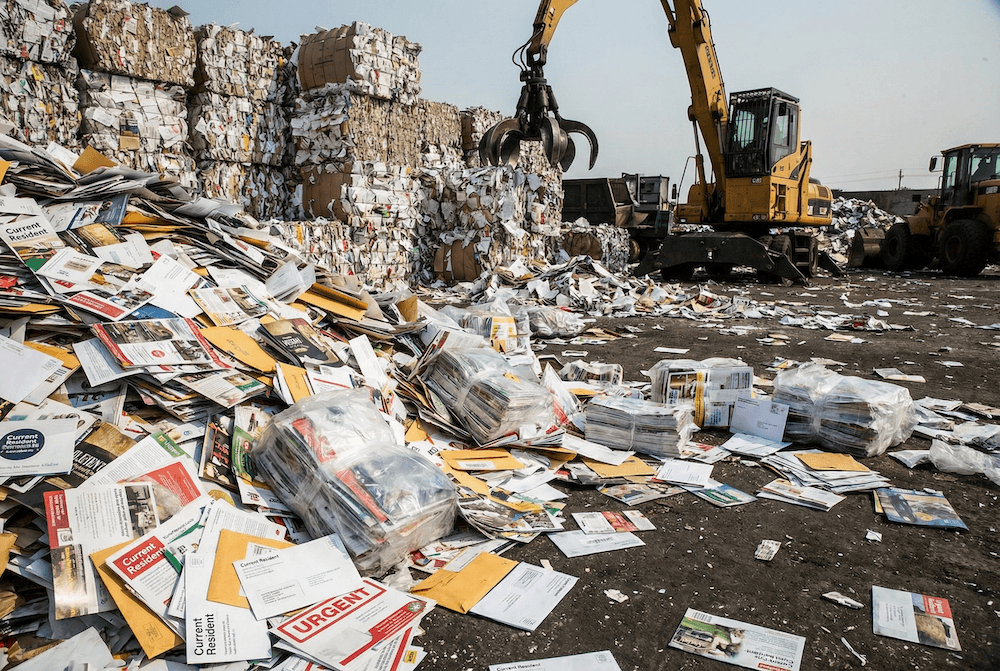
No agency counts trees for advertising mail, so every tree figure is an estimate. Ours, built from current data, is roughly 16 to 49 million trees a year, and it is a ceiling, not a count. Here is the math:
| Advertising mail USPS carried, fiscal 2025 | 4.05 billion pounds, about 2.03 million tons |
| Trees per ton of virgin paper | 7.68 for the coated paper used in most catalogs; 24 for uncoated printing paper |
| Estimate | 2.03 million tons × 7.68 to 24 trees per ton = roughly 16 to 49 million trees |
Sources: USPS Revenue, Pieces and Weight report, FY2025; Conservatree, “Trees Into Paper.” The multiplication is ours.
The top of that range assumes every pound of advertising mail is paper made entirely from freshly cut trees about 40 feet tall, the size behind Conservatree's per-ton figures. Real mail falls short of that: not all of its weight is paper, some paper contains recycled fiber, and, as Conservatree points out, “many of the ‘trees’ used to make paper are just chips and sawdust.”
The figure you have probably heard, 100 million trees a year, was estimated in 2007, when advertising mail volume was nearly twice today's. Where that number comes from.
How much junk mail ends up in landfills?
No one has measured that recently. The EPA's latest product-level data counts 3.67 million tons of advertising mail entering the municipal waste stream in 2018, about 1.3% of all the municipal solid waste generated that year. But for every year after 2005, the EPA's tables stop splitting that tonnage into recycled, burned for energy and landfilled.
In 2005, the last year with a split, 35.8% of advertising mail was recycled and 3.06 million tons went to landfills. The EPA's series also shows the category shrinking, from 5.83 million tons in 2005 to 3.67 million in 2018.
The EPA figure and the USPS weight at the top of this page don't match, and shouldn't be expected to: they describe different years (2018 and fiscal 2025), and the agencies measure in different ways.
Is recycling junk mail enough?
It is better than the trash, but it comes late in line. The EPA calls source reduction, not creating the waste at all, “the most environmentally preferred strategy,” ranked ahead of recycling. A recycled flyer has still been made, printed, trucked and delivered.
For advertising mail, source reduction means not sending pieces to people who don't want them. For addressed mail, the free opt-outs in our guide to stopping junk mail do exactly that. For EDDM there is no household opt-out, only a request you can make to each advertiser, one at a time.
How much junk mail goes unread?
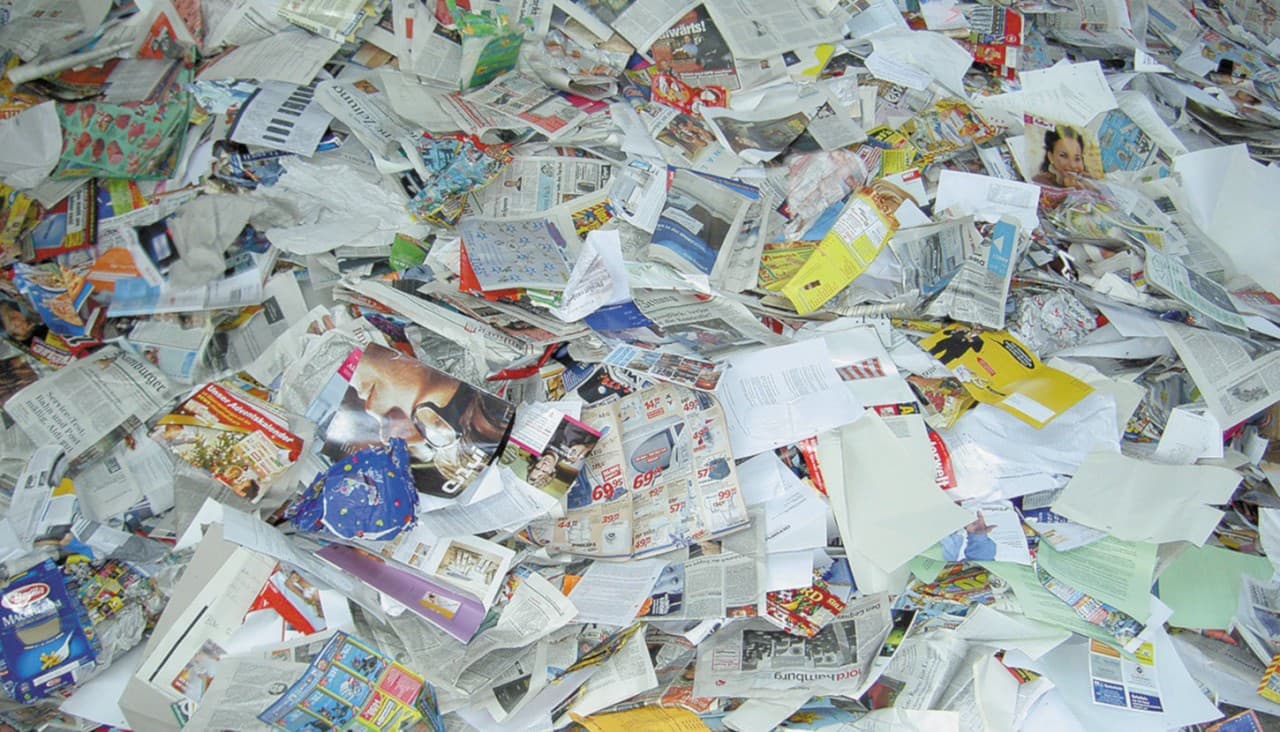
39% is thrown away without being read, according to the Postal Service's own Household Mail Survey for fiscal 2025. Households read 51% of their advertising mail and set aside the other 10%.
The average household received 393 pieces of advertising mail that year, down from 659 in 2015. Households headed by someone 65 or older got the most: 529. Ads from businesses a household had no relationship with were read only 36% of the time. Every unread piece was still made, printed and delivered.
Where do the famous junk mail numbers come from?
Search for junk mail statistics and the same handful appear everywhere: 100 million trees, 51.5 million metric tons of greenhouse gases, 28 billion gallons of water, 44% thrown away unopened. Most trace back to two documents: a San Francisco Department of the Environment press release from January 2007, and “Climate Change Enclosed,” an August 2008 report by the advocacy group ForestEthics (now Stand.earth).
Both were written when U.S. advertising mail ran about 100 billion pieces a year, nearly double the 56.8 billion of fiscal 2025. As the numbers were copied from site to site, several also picked up credits to organizations that didn't produce them. This page did that too, until this update.
| The number | Where it comes from |
|---|---|
| 100 million trees a yearToday: Roughly 16 to 49 million, by the estimate above | The earliest source we found is a San Francisco Department of the Environment press release of January 22, 2007, which gives no method. ForestEthics repeated it in 2008. It is often credited to the Center for Development of Recycling at San Jose State University, but we could not find that study. |
| 51.5 million metric tons of greenhouse gasesToday: No current estimate | ForestEthics, “Climate Change Enclosed,” August 2008, which put U.S. direct mail at 100 billion pieces a year. A 2023 VoLo Foundation blog post repeated it. The “9 million cars” and “11 million cars” comparisons are conversions of it. |
| 28 billion gallons of waterToday: No current estimate | The same 2007 San Francisco press release, again with no method given. |
| 44% thrown away unopenedToday: 39% thrown away unread (USPS, fiscal 2025) | ForestEthics, 2008: “44 percent of direct mail goes to landfills unopened.” The EPA does not publish it. |
| 848 pieces per household a yearToday: 393 pieces (USPS, fiscal 2025) | ForestEthics, 2008, in the same report that put the national total at 100 billion pieces. |
| $320 million a year in local disposal costsToday: No current estimate | Circulated by the opt-out service 41pounds.org, with no date or method. We found no municipal study behind it. |
| 8 months of your life spent on junk mailToday: No current estimate | In print since at least 1995, when The Virginian-Pilot attributed it to the Postal Service. We found no USPS source for it. |
None of this makes junk mail harmless. The current numbers are smaller, and they still make the case: tens of billions of pieces, millions of tons, and more than a third of it thrown away unread.
Correction, October 2026: earlier versions of this page used all of the figures in this table, plus landfill, transport and savings estimates we could not source, and credited several of them to organizations that did not produce them, including the EPA and the VoLo Foundation. They have been replaced with the sourced figures on this page.
Would an EDDM opt-out help the environment?
Yes, in proportion to how many households use it. An opt-out would not stop anyone getting mail they want; it would stop flyers being printed, trucked and delivered to homes that throw them straight out.
Where cities have gone further and made flyers opt-in, the paper fell fast. Montreal has required a household's consent for flyer delivery since May 2023, and by the city's count the weight of flyers distributed on the island fell from 20,800 tonnes in 2019 to 3,328 tonnes in 2024, a drop of 84%.
Opt-in is a stronger rule than the opt-out the petition asks for, so a U.S. opt-out would cut less. Nor is opt-in an easy sell: France tested it in 14 areas from 2022 to 2025 and chose not to extend it nationwide. But any French household can still refuse flyers with a “Stop Pub” sticker, and Canada Post stops unaddressed advertising for households that ask. The United States has no equivalent. How other countries handle unaddressed advertising.
Junk mail and the environment: quick answers
How many trees are cut down for junk mail each year?
No agency counts it. Using current data, about 2.03 million tons of advertising mail in fiscal 2025 (USPS) times Conservatree's 7.68 to 24 trees per ton of virgin paper gives roughly 16 to 49 million trees, a ceiling rather than a count. The often-quoted 100 million dates from 2007, when volume was nearly twice today's.
What is the carbon footprint of junk mail?
There is no current, primary estimate. The widely quoted 51.5 million metric tons of greenhouse gases comes from a 2008 ForestEthics report that put direct mail at 100 billion pieces a year, nearly double today's volume, so it should not be used as a current figure.
How much junk mail ends up in landfills?
No current figure exists. The EPA counted 3.67 million tons of advertising mail in the municipal waste stream in 2018, but its tables have not broken out how much is landfilled or recycled for any year after 2005. That year, 3.06 million tons went to landfills and 35.8% was recycled.
How much junk mail is thrown away unread?
39% of advertising mail, according to the USPS Household Mail Survey for fiscal 2025. The often-cited 44% “thrown away unopened” comes from a 2008 advocacy report, not from the EPA.
Is recycling junk mail enough?
It is better than the trash, but by then the paper has already been made, printed and trucked. The EPA ranks source reduction, not creating the waste in the first place, as the most environmentally preferred strategy, ahead of recycling.
Would an EDDM opt-out help the environment?
Yes, in proportion to how many households use it: fewer flyers printed and trucked to homes that throw them away. Montreal, which made flyer delivery opt-in in 2023, reports that the weight of flyers distributed on the island fell 84% from 2019 to 2024.
Sources
- USPS reports fiscal year 2025 results, November 14, 2025
- USPS Revenue, Pieces and Weight report, FY2025
- USPS Form 10-K, FY2008 (Standard Mail volume, FY2007)
- USPS Household Mail Survey, FY2025 (Postal Regulatory Commission filing), filed April 1, 2026
- USPS Postal Facts: Every Door Direct Mail (EDDM), updated May 15, 2026
- EPA, Advancing Sustainable Materials Management: 2018 Tables and Figures (Tables 5, 18, 19 and 21), December 2020
- EPA, Non-Hazardous Materials and Waste Management Hierarchy
- Conservatree, Trees Into Paper
- San Francisco Department of the Environment, Stop Junk Mail Kits press release, January 22, 2007
- Total Retail, “Environmental Report Exposes Direct Marketers” (on ForestEthics' report), August 12, 2008
- VoLo Foundation, “Fighting Junk Mail Is Helpful for the Environment”, December 1, 2023
- The Virginian-Pilot, “There Are Ways to Cancel Junk Mail”, March 5, 1995
- Ville de Montréal, results of the flyer distribution bylaw (press release, in French), September 10, 2024
- French Ministry of Ecological Transition, the Oui Pub experiment (in French)
- Canada Post, Consumers' Choice